Utilities and public services
A practical guide to managing everyday services in your home—from waste and water to internet, electricity, and fire safety.
When settling into life in Oslo, understanding how utilities and public services work can help you feel more confident and prepared. This guide explains how to manage waste, water, electricity, internet, TV, phone services, and fire safety in your home, with tips tailored for newcomers.
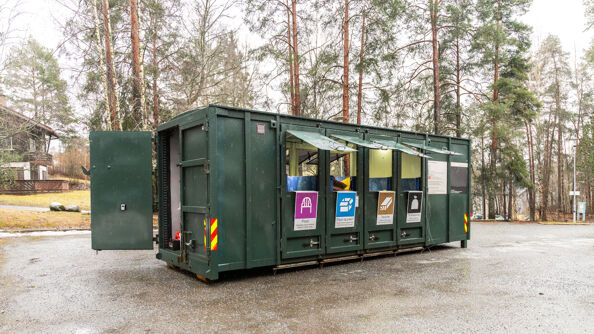
Waste and recycling: how to sort and dispose of household waste
Oslo has a well-organized waste management system, and residents are expected to sort their household waste according to specific guidelines. This helps reduce environmental impact and ensures that recyclable materials are reused properly.
Sorting household waste in Oslo:
In your home, you'll want to sort waste in different bags or bins:
- clean plastic packaging (use purple bags, which you can get for free at the supermarket),
- food waste (use green bags, which you can get for free at the supermarket)
- residual waste (use a normal plastic bag, which you can buy at the supermarket or re-use)
- paper and cardboard (use separate bin)
The above items can be recycled in the trash cans that belong to your apartment complex or house. You can find waste removal schedules by searching for your address here (in Norwegian).
Glass and metal recycling containers are placed around different neighborhods. Find glass and metal return points by searching for your address here (in Norwegian).
Larger items and hazardous waste
For larger items and hazardous waste, there are recycling stations ("gjenvinningsstasjoner") in Oslo. Be aware that you can only use clear plastic bags, not black, when bringing your waste to the recycling stations as they need to see the content.
Important: You must not leave large items, hazardous waste, or electronics by the outdoor bins or on the street. These must be delivered to special collection points or recycling stations.
- Find recycling stations for these miscellaneous items near you.
- In January every year, there is a special pick-up service for Christmas trees (in Norwegian).
Sorting waste correctly helps reduce landfill use and supports Oslo’s sustainability goals.
Oslo's water supply: clean, safe, and reliable
Tap water in Norway is clean and safe to drink.
In the event of water supply issues, the municipality will send an SMS alert to your phone. To receive this (and other alerts from the City of Oslo), keep your mobile number updated in Altinn.no.
- Read more about SMS alerts for water supplies (in Norwegian).
- You can send a complaint about water quality to the Norwegian Consumer Council (Forbrukerrådet) (in Norwegian).
Water bills are usually included in rent or paid quarterly if you own your home.
Electricity: heating, billing, and providers
Electricity is the main heating source in Norwegian homes. It is not very common to have gas for heating or cooking in private homes.
When you move into a new home, you will usually find that the electricity has not been disconnected. You only have to transfer the contract/account to your name.
Electricity in Norway is 220 volts AC, 50Hz. The plugs are standard European, with two round plugs.
Electricity prices and providers
The price for electricity fluctuates during the year, with higher prices and consumption in the winter. In Norway, most households now have smart electricity meters (SMA) that send readings automatically to your electricity provider.
The infrastructure is owned by Elvia (previously called Hafslund) in Oslo. For usage, you can choose between many providers. If you don’t make an active choice, you will be charged for your usage by Elvia, which will not necessarily be the cheapest deal available.
The Norwegian Consumer Council has a free service (strømpris.no) comparing prices between electricity providers and their various offers. You will often find a better price through this service than you will find if you go to each provider’s webpage.
- Go to strømpris.no to compare electricity providers (in Norwegian).
- Go to The Norwegian Consumer Council for advice regarding electricity providers and contracts (in Norwegian).
Electricity bills are typically paid monthly and may be included in rent for some apartments. You pay for both the infrastructure and for your usage, but both charges are invoiced together.
Internet access and phone services
Internet providers in Norway maintain their own cable infrastructure, so availability may vary by address.
There are many options to choose from, and quite a few online commercial services comparing prizes and offers. Many internet providers also sell mobile phone services and TV packages, so comparing offers is not always easy.
- Go to The Norwegian Consumer Council for advice on how to choose an internet provider.
Phone services
Landlines, or fixed lines (hustelefon, hjemmetelefon), is not very common in private households as the mobile coverage is good in most areas. It can take up to three months to get a landline installed.
- Read more from Welome to Oslo: What to expect in your first months.
Make sure to check contract terms and cancellation policies before signing up.
TV and radio: public and private options
NRK
NRK is the national, publicly funded media provider. They run commercially free TV channels (NRK 1, 2, 3, and NRKSuper for children), several radio channels and a news website (NRK.no).
In the NRK TV and radio apps, you can access all the content for free, but they do not subtext in English.
Other channels and subscriptions
Other Norwegian channels are funded either by commercials or subscriptions.
TV providers will bundle the channels together with some basic channels and a selection of your choice in addition. You will need a decoder or a dongle (small device) to stream content to your TV screen.
- Go to forbrukerradet.no for information about your rights when buying TV services (in Norwegian).
Radio
National radio broadcasts in Norway has been fully digitized. This means you can stream the content online or get a DAB-radio.
- Go to medietilsynet.no for information about digital radio.
- Learn more about Norwegian media from Welcome to Oslo.
A balanced mix of public and private media services ensures that residents in Norway have access to a wide range of content, from news and entertainment to educational programming.
Fire safety in your home
There is a lot you can do to reduce the fire hazards in your home. The most important thing is to have a smoke detector and fire extinguisher.
- Go to brannvernforeningen.no for information about fire safety in many languages
- Go to branntips.no for frequently asked questions about fire safety
The Fire Department does regular fire safety checks ("boligtilsyn").
- Read more about fire safety and municipal fire services (in Norwegian).
- You might also be interested in Sikkerhverdag.no, where you can find advice about various safety measures.
If chimney sweeping or fire inspections are not included in your rent, you’ll receive a digital invoice from the municipality.
In case of emergency, call 110 for fire services, 112 for police, and 113 for medical assistance.
Related links
- Go to Nordic Co-operation for additional information about electricity, mobile phone, and broadband services.
- Watch our "Daily life in Oslo" video to learn more.