Kindergartens and childcare
Explore Norway’s approach to early childhood education, types of kindergartens, and how to apply for a spot in Oslo.
Kindergarten (barnehage) is a voluntary educational program for children below school age.
In Oslo, more than 90% of children attend kindergarten, which reflects the strong cultural emphasis on early childhood development. There are both municipal and private kindergartens, and all follow a shared admission process.
The Norwegian kindergarten philosophy
Play, care, learning and formative development are important in the Norwegian kindergarten.
Norwegian kindergartens focus on play, care, learning, and formative development. Childhood is seen as having intrinsic value, and kindergartens aim to support the child’s holistic development in close partnership with families.
The national Framework Plan for the content and tasks of kindergartens guides all pedagogical practices. It emphasizes:
- Respect for children and the value of childhood
- Democracy and participation
- Diversity and mutual respect
- Equity and equality
- Sustainable development
- Life skills and health
Kindergartens work in close partnership with families to meet children’s needs and support their growth in a safe, inclusive environment.
Types of kindergartens in Norway
As you start to explore the kindergartens of Oslo, you will likely come across different Norwegian terms explaining how some kindergartens differ from others by being especially targeted for various groups.
- Municipal kindergartens (kommunale barnehager) are run by the local government and follow national guidelines. They are generally affordable and widely available.
- Private kindergartens (private barnehager) may offer alternative pedagogical approaches, such as Montessori or Waldorf, and sometimes have longer opening hours.
- International kindergartens cater to families who prefer instruction in English or other languages. These are especially popular among expats and international students.
- Family kindergartens (familiebarnehager) are small-scale settings run from private homes, often with fewer children and more flexible hours.
These different options allow families to choose a setting that suits their lifestyle and needs.
Public vs. private kindergartens
Public kindergartens are owned by the Municipiality of Oslo (Oslo kommune), while private kindergartens can be owned by commercial enterprises, companies (bedriftsbarnehage), or non-profit organisations.
All Norwegian kindergartens, wether they are public or privately owned, are obligated to follow “The Framework Plan for the content and tasks of kindergartens”. The difference in pedagogical practice between public and private kindergartens are therefore minimal.
Choosing a kindergarten
When choosing a kindergarten, consider location, opening hours, language support, and whether the environment suits your child’s needs.
You can apply to any kindergarten in Oslo, regardless of where you live, but proximity may affect availability.
Before applying, it’s possible to visit kindergartens to get a sense of the environment and ask questions. Most kindergartens host open days during the winter months. If a kindergarten isn’t listed, you can still contact them directly to arrange a visit. Seeing the environment can help you make a confident choice.
We also recommend starting to research kindergartens and the application process early, as soon as you know your moving date.
It's also a good idea to connect with other families by joining local parenting groups or forums, which can provide valuable and personal insights and support.
Application and admission process
Kindergarten admission in Oslo is managed through a common application system run by the municipality. The main deadline is 1 March each year, with placements starting in August or September.
You can apply at any time, but most kindergartens fill up during the main admission round.
- List of kindergartens with available spots (in Norwegian)
- List of all accredited kindergartens in Oslo (in Norwegian)
- How to apply for Kindergarten (in English)
Each individual kindergarten has a website with specific information.
Cost of kindergartens in Oslo
Kindergarten fees are partially covered by the public and the additional fee is set according to the family’s income. This ensures that kindergarten remains accessible to most families.
In addition to tuition, there is usually a monthly fee for meals, which varies between kindergartens.
You pay in advance each month, except for July, which is free of charge due to the national vacation requirement. Children must take at least three weeks of vacation annually, and a total of four weeks is recommended.
Inside Norwegian kindergartens
A typical day in a Norwegian kindergarten includes a mix of structured and unstructured activities. Children arrive in the morning and begin with free play, followed by group activities such as singing, storytelling, or crafts.
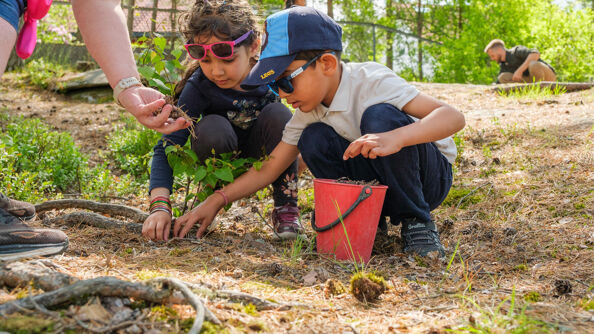
Outdoor play is scheduled daily, and kindergartens are equipped with safe and stimulating uteområder (outdoor areas). Children may also go on short nature walks or excursions.
Younger children often have a tilvenning (adaptation period) when they start, allowing them to gradually adjust to the new environment with support from staff and parents.
Language in kindergartens
Oslo is home to families from over 200 nationalities, and this diversity is reflected in its kindergartens. Many children are bilingual, and staff are trained to support children who are new to the Norwegian language.
Norwegian is the main language used in kindergartens, except in Sami kindergartens, where Sami is the primary language.
Kindergartens are guided by the national Framework Plan, which emphasizes the importance of language in all aspects of a child’s development. Staff are expected to:
- Support children’s communication and participation
- Recognize and value different forms of language, including sign language
- Provide appropriate language stimulation
- Create inclusive environments for multilingual children
The number of staff per child
To ensure quality care and safety, Norwegian kindergartens follow strict staffing guidelines:
-
one employee per three children under the age of three.
- one employee per six children over the age of three.
- one educational leader per 7 children under three years.
- one pedagogical leader per 14 children over three years.
Children are considered 3 years old from August of the year they turn three.
Municipal kindergartens also follow group size guidelines to ensure that children are part of a safe and pedagogically sound environment.
Preparation to start kindergarten
Starting kindergarten is a big step for both children and parents.
Most kindergartens offer open days or introductory meetings to help families prepare. You’ll receive a checklist from your chosen kindergarten, but you can also read our guide:
Keep in mind that this is a general list and that you might get a more specific one.
Other forms of daycare
In addition to kindergartens, some families choose private childcare arrangements such as nannies or babysitters. These are not publicly regulated, so it’s important to:
- Check references carefully
- Sign a formal contract if the arrangement is regular
- Report expenses in your tax return if you employ someone privately.
- Learn more about taxes for private childcare from Skatteetaten.
In Norwegian, these roles are often referred to as:
-
Dagmamma: nanny
-
Barnevakt: babysitter
-
Praktikant: au pair or helper
These alternatives may suit families with specific needs or preferences.
Contact points
If you’re unsure who to contact, we recommend calling the Oslo Service Centre at 2180 2180. If calling from abroad, use +47 or 0047.
The service centre can answer your questions or direct you to the appropriate office.